AD DISCLOSUREPadelFit is reader-supported. We may earn a commission when you purchase through our links. Learn more
How to choose a padel racket: the 6 questions that matter
As an Amazon Associate, Padel Fit earns from qualifying purchases.
Clicking "Check price on Amazon" takes you to Amazon at no extra cost to you.
There are hundreds of padel rackets on sale in the UK, and most of the marketing copy is interchangeable: power, control, carbon, "pro". Strip that away and choosing well comes down to six questions. Answer them honestly and the shortlist mostly builds itself - it's the same logic our gear quiz runs, and the same logic a good coach uses.
1. What's your actual level?
Not your ambition - your level. If you've been playing under a year, mishits are still a regular feature, and the right racket is one that forgives them: a bigger sweet spot, an easier swing. Overestimating your level is the most expensive mistake in racket buying, because a demanding racket punishes exactly the shots you're still learning.
2. How do you win points?
Some players construct: lobs, walls, patience, placement. Some players finish: take the net, look for the smash. Constructors want control-oriented rackets that place the ball precisely. Finishers - with the technique to back it up - benefit from shapes and balances that add pace to overheads. If you're not sure which you are, you're a constructor.
3. What shape suits that answer?
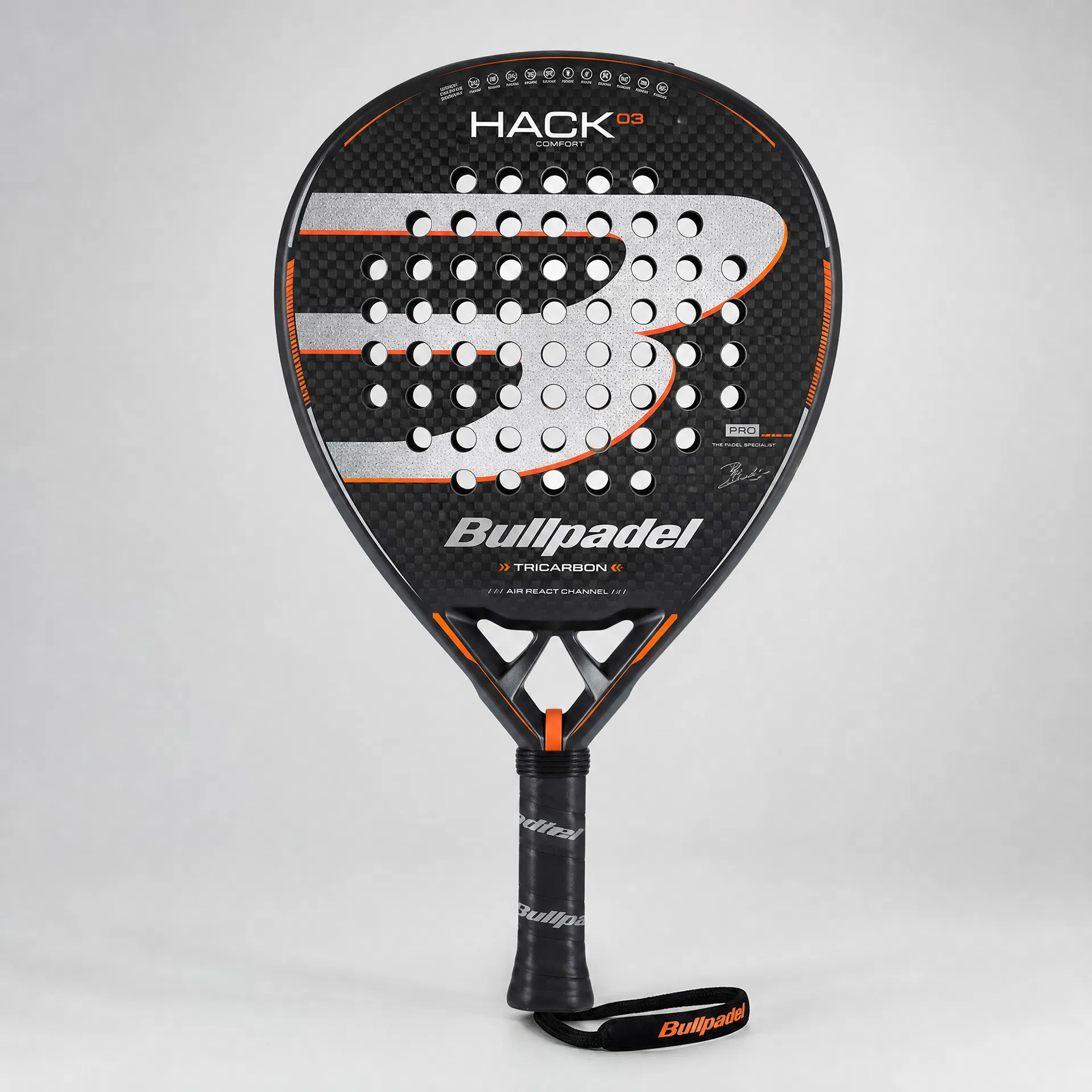
Round for control and forgiveness, teardrop for balance, diamond for committed attackers. We've covered this in depth in our racket shapes guide, but the short version: buy rounder than your ego wants, and treat diamond rackets - like the pro-grade Bullpadel Hack 03 - as specialist tools for players whose smash is already a weapon.
Bullpadel
Hack 03 2026
4.9
Paquito Navarro's weapon of choice. Diamond shape with Tricarbon face and CustomWeight balance system for maximum power and custom customization.
Pro PowerDiamond ShapeCustom Weight
As an Amazon Associate, Padel Fit earns from qualifying purchases.
Clicking "Check price on Amazon" takes you to Amazon at no extra cost to you.
4. How heavy, and balanced where?
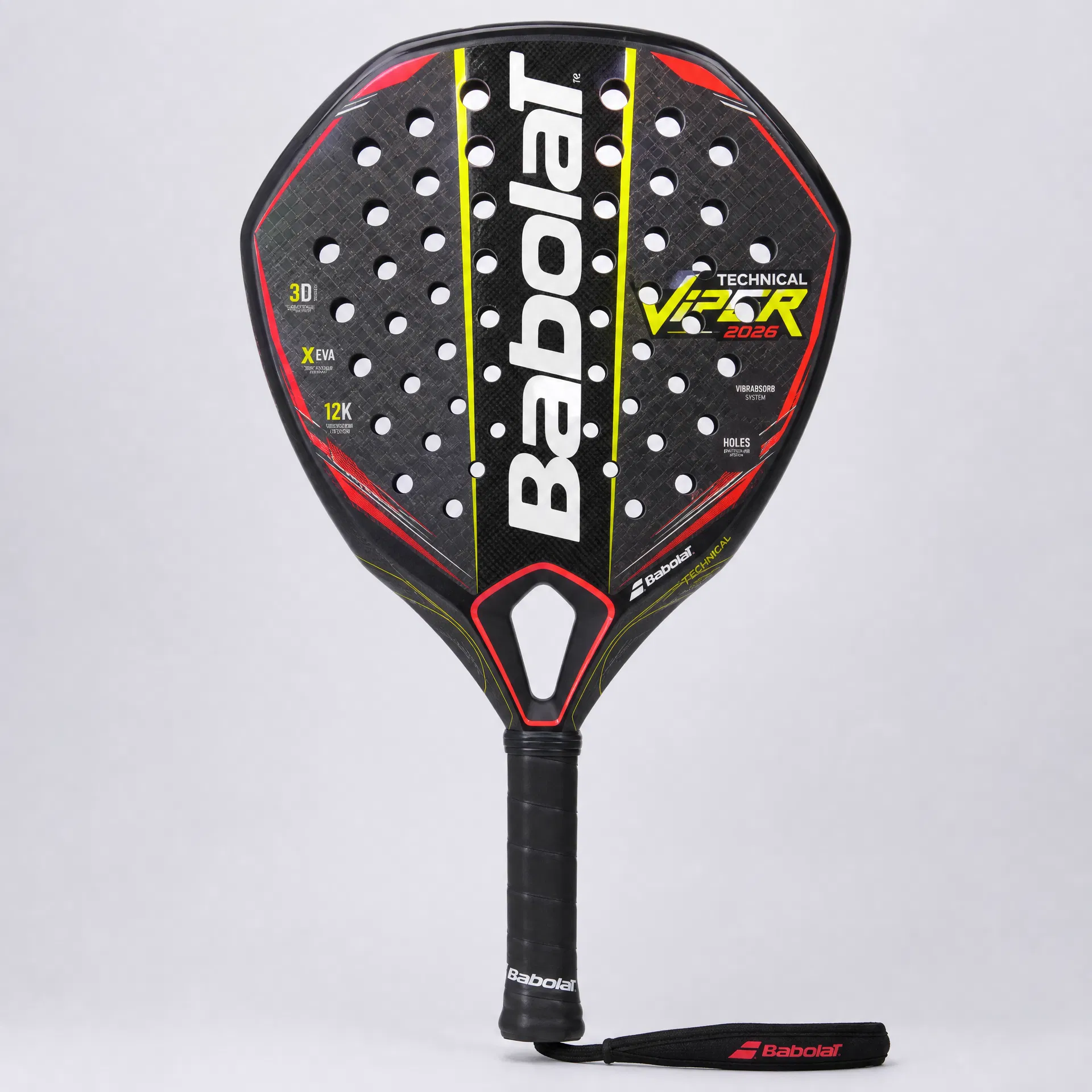
Most adult rackets sit around 350-385 grams, but the number that matters more is where the weight lives. Head-heavy rackets add power and ask more of your arm; evenly balanced or head-light rackets manoeuvre faster and are kinder over long sessions. Lighter players, younger and older players, and anyone with a grumpy elbow should lean lighter and less head-heavy. Stronger players with sound technique can carry more head weight - something like Babolat's Technical Viper is built for exactly that player.
Babolat
Technical Viper 2026
4.9
The ultimate power weapon endorsed by Juan Lebrón. Diamond shape with a hard 12K carbon face and dense EVA core for explosive overheads.
Explosive PowerDiamond ShapeStiff Core
As an Amazon Associate, Padel Fit earns from qualifying purchases.
Clicking "Check price on Amazon" takes you to Amazon at no extra cost to you.
5. Soft face or hard face?
Softer foams and more flexible faces give comfort, feel, and easy depth on slower swings - and they're the arm-friendly choice. Harder, stiffer faces reward fast swings with more explosive output, but transmit more of the impact. As a rule: newer and comfort-conscious players go softer, established attackers can go firmer.
6. Does your body have a vote?
Be honest about your age band, your injury history, and how much padel you want to play each week. A racket that's slightly "too easy" costs you almost nothing; a racket that's too demanding costs you sessions. If your elbow, shoulder or wrist has complained before, weight comfort heavily - lighter, softer, rounder. (That's fit guidance, not medical advice - persistent pain deserves a professional's opinion.)
Putting it together
A 55-year-old improver who plays twice a week and wins points with lobs needs a light, round, soft-faced racket. A 28-year-old ex-tennis player who lives at the net and trains four times a week can justify a firm diamond. Most buyers are somewhere in between, which is why the teardrop middle ground is so popular - and why guessing from a product page is so hit-and-miss.
Our quiz asks exactly these six questions - level, style, shape, weight tolerance, face preference and comfort profile - and turns your answers into specific racket recommendations with UK retail links.
Our quiz asks these six questions and turns your answers into specific racket recommendations with UK retail links.
FAQs
How much should I spend on my first padel racket? Less than you think. Entry and mid-range rackets from credible brands cover beginners brilliantly; the expensive pro models are tuned for advanced technique, not beginner enjoyment.
Should I copy my coach's or partner's racket? Only if your level, style and body match theirs. A racket that suits a fast-swinging attacker can be actively wrong for a constructor.
How often do rackets need replacing? Foam and face lose their liveliness with heavy use - many regular players notice a racket going "flat" after a season or two, sooner if it's been knocked on the glass or court.
Does more carbon always mean better? No - carbon layup affects stiffness, and stiffer isn't universally better. Softer fibreglass-mix faces are often the right call for comfort-first players.